
CleanSlate
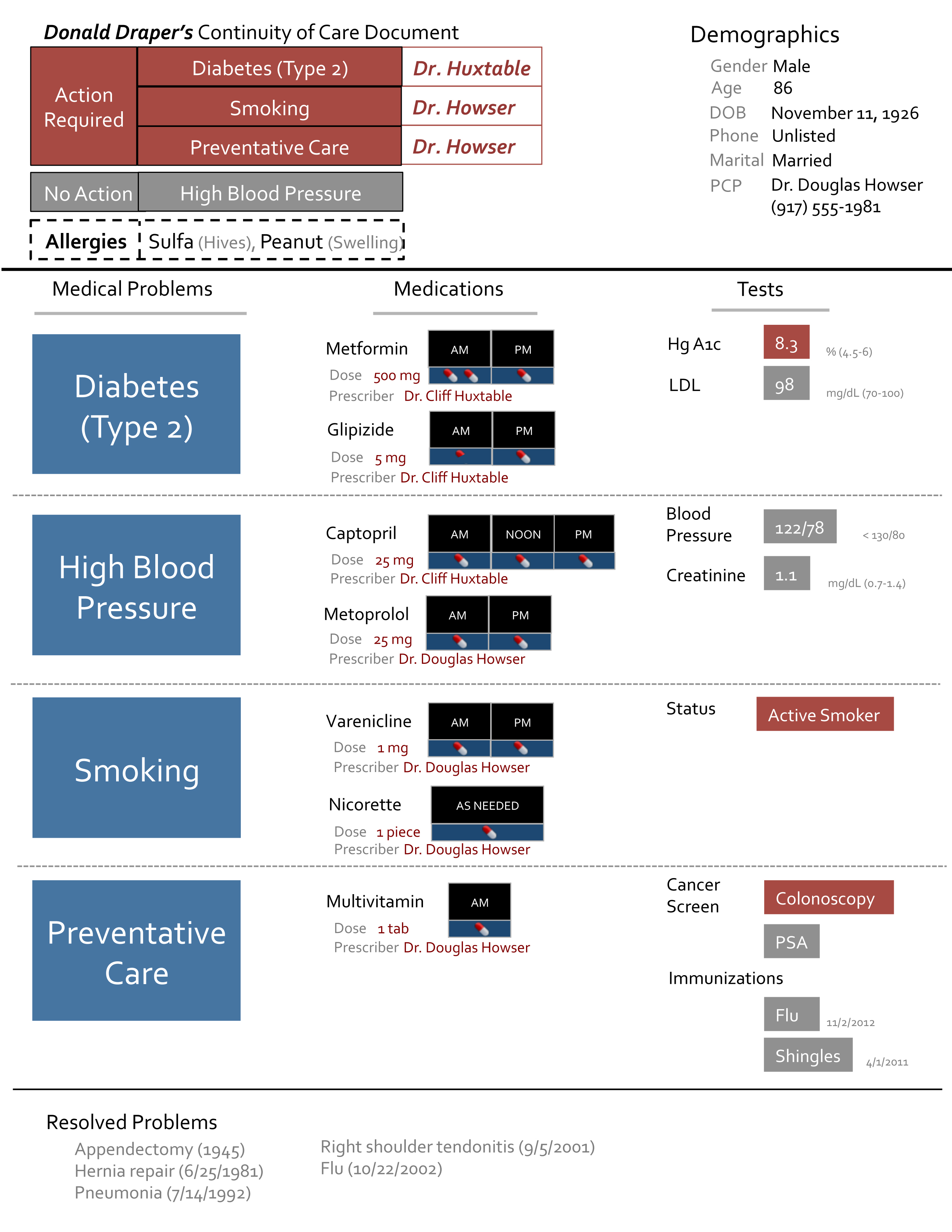
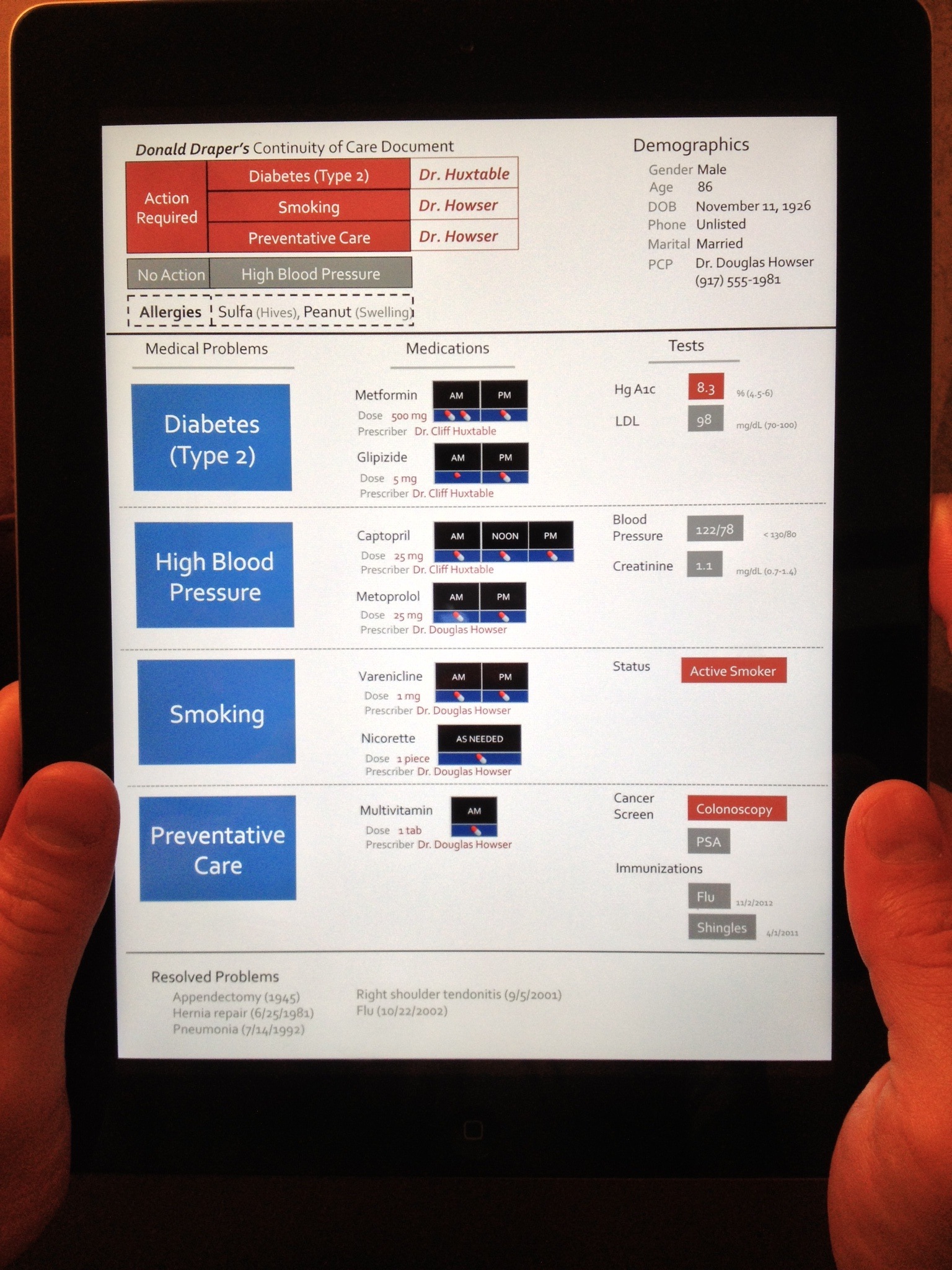
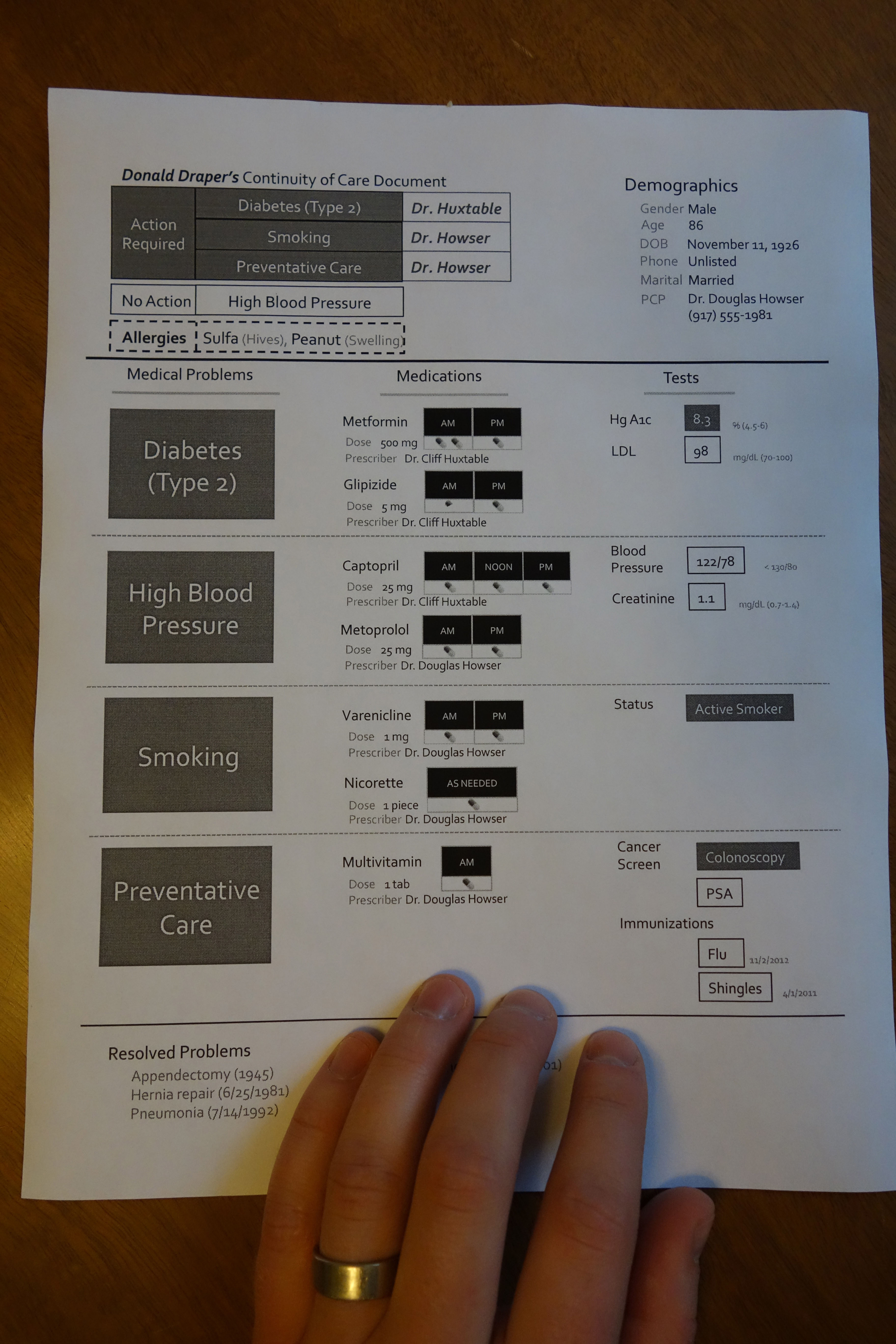
CleanSlate represents a paradigm shift in the way information in a Continuity of Care Document (CCD) exists by recognizing that all medical information in a CCD is not created equally. CleanSlate thoughtfully reformats the CCD to make it contextual, actionable, and flexible for patients and clinicians.
CleanSlate gives context to medical information by displaying it in the framework of a "Problem List", putting each medication, lab test, and procedure alongside the corresponding medical condition. By innovating on the organizational structure of the CCD, CleanSlate links visual to mental representations of information, which is a critical element of effective design and usability. This allows a patient to more easily understand, for example, that his metformin prescription is related to diabetes and that a colonoscopy is needed for preventative care purposes. Furthermore, clinicians generally conceptualize healthcare information within this type of framework and, as such, the CleanSlate visual display is intuitively understood.
CleanSlate makes information actionable rather than just a passive list on a page: the user’s first visual cues when approaching CleanSlate are the healthcare items that require action, linked to the clinician responsible for each item. Just below this is the Allergies section, which we recognize must always be easily and rapidly found for many scenarios that benefit most from CCDs, such as emergency room or alternate institution visits where quick identification and dissemination of this information can greatly impact patient care. Throughout CleanSlate, all items that are out-of-range or needing action are color-coded in red. Notably, we intentionally resist expanding the color palette in CleanSlate so that visual attention is directed primarily to the items that require action.
Moreover, our design adheres to important principles of usability. For example, we place more important information in larger font and at the left side of the page, knowing that users reading a web page do not typically read across horizontally, but rather skim down the left side. Given the lack of widespread color printing in most hospital and clinic settings, we also incorporate a black and white optimized version; a user can click “print” and generate a legible hard-copy CCD that still conveys the critical information appropriately.
Unlike standard CCD documents, CleanSlate intentionally excludes excessive text to avoid overwhelming users; instead, CleanSlate harnesses the Internet and facilitates easy action by taking advantage of “info-buttons”. Each medical term, medication, and lab test name is designed to be an “info-button” that is hyperlinked to reputable medical information sources. Users viewing the CleanSlate CCD from a computer can quickly and easily delve further into a topic if desired. The medication list is also actionable, clearly showing patients the appropriate times and quantities for each medication, which are linked via “info-buttons” to information sources that can cross reference medication lists to flag potential drug-drug interactions.
The flexible interface of CleanSlate acknowledges that patients, family members, and caretakers have wide variations in cultural backgrounds, health literacy levels, and uses for a CCD—it is implemented to be accommodating for all users. The "light" user can interact more superficially with CleanSlate by seeing critical information such as medical problems and associated medications at a high level. Meanwhile, the "heavy" user is able to explore the CCD in more depth, easily gleaning detailed information from the “info-buttons”.
Overall, CleanSlate changes the conceptualization, execution, and usability of the CCD. It empowers all users of this document, from clinicians to patients, to more effectively utilize the information within the CCD and improve the healthcare management process.
0 comments